The Shallows
Book Reviews

Kathy Kuhl’s Reviews of Books on Helping Children with Learning or Attention Difficulties
Earlier Reviews
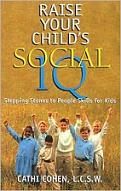
Raise Your Child's Social IQ by Cathi Cohen, L.C.S.W.
Advantage Books. © 2000. 244 pages. ISBN 978-0-9660366-8-8.
Raise Your Child’s Social I.Q. guides parents to help develop their children’s social skills.
A mother and a Licensed Clinical Social Worker with fifteen years of experience running a mental health practice and counseling children and adolescents, Cohen has written a clear, practical book to help us apply the principles she developed to teach social skills.
This book helps you take the core principles of her Stepping Stones social skills program and carry it into your children’s lives at home and in the community.
Though not written for homeschoolers, this approach is easy to apply to homeschool.
While our homeschooled children are not surrounded by peers all day, we can use these techniques to teach skills to practice in homeschool group settings, at the playground, and in the family.
While Raise Your Child’s Social I.Q. was not written for children with learning difficulties, it concludes with a thoughtful sixteen page afterword, “For Parents of Children with Special Needs,” which recognizes our special challenges.
The afterword specifically addresses attention deficit disorder, non-verbal learning disability, and Asperger Syndrome and high-functioning autism, but children with other conditions can benefit from this program, too.
Knowing we can’t fix everything at once, Cohen divided this book into ten chapters, beginning with more basic skills:
- Joining in
- Communicating and conversing
- Reading social signals
- Raising self-esteem
- Coping with teasing
- Managing stress
- Solving social problems
- Resolving conflicts
- Managing anger
- Putting it all together
Each chapter begins with a couple examples of children needing this chapter’s social skill, followed by a short quiz to help you decide if this skill is one your child needs to develop.
(You needn’t wait until your child perfects one skill before moving to the next chapter, the author reassures us.)
Next comes a discussion of that skill and what it includes.
For example, in Chapter 2, on Communicating and Conversing, Cohen explains how to teach making good eye contact, practicing active listening, using a pleasant tone of voice, and respecting other people’s personal space.
Cartoons, checklists, charts, games, and logs show you how to understand, explain, and help your child practice skills and track progress.
The large print, headings, and layout make the book easy to use.
I recommend this book.
If you click on the link below to order a copy, Amazon will send a small portion of the price to help defray the expenses of this website and newsletter.
Thank you.

The Mislabeled Child: Looking Beyond Behavior to Find the True Sources—and Solutions—for Children's Learning Challenges
by Brock Eide, M.D., M.A., and Fernette Eide, M.D.
Hyperion, 2007. 510 pages. ISBN: 978-1-4013-0899-5
Drs. Brock and Fernette Eide have tackled a tough task: explaining many different kinds of learning problems in clear language with practical advice.
The result is impressive.
If the size—over 500 pages—puts you off, relax.
This is a book you can dip into, a useful manual to help you understand your child and how to teach that child more effectively.
Why Mislabeled Child?
The Eides address this in their first sentence with a Chinese proverb, “The beginning of wisdom is calling things by their right name.”
Labels, the Eides tell us, shape our thoughts.
We must not, they warn us, equate a child with a label.
“Statements like, ‘He’s ADHD,’ or ‘She’s Aspergers’ leave too much unsaid,” (pp. 5-6). They keep us from seeing strengths, tempt us to see the child as diseased,
to ignore the effects of the educational environment, or to overlook the child’s character, temperament, home, and parents.
The first chapter ends by explaining how they use labels in the book.
The second chapter, “How to Get the Most Out of This Book,” introduces basic concepts and the book’s structure.
After a brief introduction, each chapter discusses a different problem four ways.
“Behaviors” is the section to skim if you aren’t sure this chapter applies to your child.
Next, the Eides explain causes of the problem.
The “Evaluating” section explains how this condition is diagnosed.
Finally, under “Helping,” the authors outline ways to help a child strengthen areas of weakness, work around them, or compensate for them.
The next chapter, on memory, is a vital part of the book.
Memory problems are closely wrapped up with many learning problems.
In the remaining ten chapters, the authors explore:
- Visual problems,
- Auditory problems,
- Language problems,
- Attention problems,
- Autism and autism-like disorders,
- Sensory processing disorder,
- Dyslexia,
- Dysgraphia,
- Math problems in children, and
- How giftedness can cause learning challenges.
I highly recommend The Mislabeled Child as a resource to keep handy.
If you click on the lick below to order a copy, Amazon will send a small portion of the price to help defray the expenses of this website and newsletter.
Thank you.

ADHD & Me: What I Learned From Lighting Fires at the Dinner Table by Blake E.S. Taylor
New Harbinger, 2007. 176 pages. ISBN: 978-1-57224-522-8
Any parent of a teen with learning problems will be encouraged to see another teen with those problems is able to write a book.
How much more encouraging when it’s a well-organized, helpful book.
This book is not a “Here’s how I did it” success story, but a volume that, with honesty and humor, illustrates what it means to struggle to learn to succeed.
Each of the short chapters deals with one struggle.
Taylor wisely begins each chapter with a few pages of story, a scene from his life illustrating the subject of that chapter.
Next, he gives a two-page summary of the problem and its effects, followed by concise advice on how to deal with the concern.
The chapters cover:
- Chapter 1. Being distractible
- Chapter 2. Being impulsive
- Chapter 3. Being disorganized
- Chapter 4. Being hyperactive
- Chapter 5. Having tics
- Chapter 6. Being unpopular
- Chapter 7. Being bullied
- Chapter 8. Being isolated
- Chapter 9. Being misunderstood
- Chapter 10. Being blamed
- Chapter 11. Being rigid
- Chapter 12. Being disobedient
- Chapter 13. Being discriminated against
- Chapter 14. Taking control
- Chapter 15. Being gifted
I’m impressed by the wisdom the young author often shows.
For instance, in his chapter on being blamed for things you didn’t do, he suggests when it may be good to bring another adult in to help you present your case to other adults.
He wants his readers to “know that sometimes it’s just not fair.”
Disputes aren’t always resolved justly.
Other things to help you decide if this book is for you or your student.
- This author was never homeschooled.
Nearly every chapter mentions teachers or school, but the principles in dealing with these adults and situations are applicable to homeschool situations as well.
ADHD & Me will be particularly helpful to homeschooled teens who are beginning to take charge of their schoolwork, take jobs and have other involvements with other adults through community activities and classes.
- The author mentions taking medication for his ADHD.
He does not claim that prescriptions cure ADHD, but this young man clearly believes it has helped him.
- Taylor is frank about his occasional urges to break rules (e.g. while learning sailing, he longed to sail beyond the bounds set by his sailing school).
He describes how he got into trouble and how to deal with those urges to flout the rules.
- This book is not told in chronological order.
Each chapter’s subtitle highlights the incident that opens the chapter and tells the author’s grade when it occurs.
You’ll jump from second grade to tenth, to preschool, and so on.
- This author reflects our broader culture, with difficulties common to many children.
His parents are divorced, his family moves across country from beloved grandparents when he is young, his mother works.
- Taylor’s family is affluent: his mother is an IBM executive, he has a nanny caring for him and his sister, and they can afford to hire a trainer at a gym to help him get started on an exercise regimen.
The last chapter makes the case that ADHD is a gift, not a disability, a controversial view that I think misstates a related truth.
Taylor and I both think the hyperactive toddler can be come an energetic, productive adult.
He links impulsivity and distractibility with innovation.
I do not.
I share Taylor’s wish to encourage teens to cultivate their gifts, I don’t think there is a definite link between gifts and ADHD.
I believe people with ADHD have gifts and need to develop them, working on ways to compensate for their difficulties.
That said, I think Blake Taylor has written a good book, with humor, clarity, and honesty. He is achieving his goal of helping other teens.

Home Schooling Children with Special Needs by Sharon C. Hensley, MA
Pleasant Word, 2009. 258 pages. ISBN: 978-1-4141-1276-3
I am excited that Sharon Hensley has updated her book; the 1995 edition has been hard to find.
This new edition offers more resources and is easy to read, with very short chapters; many are five pages long, making it easy to read in limited time.
Her approach is realistic and her style is clear.
With an MA in Special Education and twenty four years teaching experience in that field, this expert is helpful, honest and occasionally humorous about her own shortcomings.
Structure: Sharon divides her book into four sections.
Getting the Facts begins with explaining the need for a diagnosis, the value and limits of such labels, and very brief but clear sketches of a variety of special needs:
learning “mis-matches,” underachievers, slow learners, learning and communication disorders, mental retardation (developmental disabilities), and autism spectrum disorders.
My favorite section is the second, Tackling The Issues.
While some parents will rush to the later sections, here Sharon addresses the issues that make or break our homeschools:
setting realistic expectations, dealing with feeling of inadequacy, grief, anger, and discouragement.
She discusses accepting our situation, finding time for ourselves, support groups, and caring for our other children.
Chapter Seventeen is the best essay on the socialization of special needs children that I have read, and Chapter Eighteen is a well-thought-out chapter on behavior problems.
Section Three, Planning Your Program, begins by explaining how any program should be consistent, realistic, and appropriate.
The author then discusses writing a plan, understanding test results, setting goals, with a separate chapter on planning high school.
Concluding this section are chapters on undertanding learning styles and various teaching methods and techniques.
Sharon helps you choose curriculum in the final section of her book.
Each chapter here helps you understand and strengthen different kinds of skills: gross and fine motor, reading, receptive language, expressive language, and math.
Resource sections conclude each chapter.
The book is full of valuable advice any parent of a special needs child would benefit from.
It also reflects the Christian perspective of the author:
“God meets us where we are and moves us along this slow and often painful road to becoming the image of his Son.” (p. vii.).
Sharon writes that parents “need to accept our children as unique creations of God, and …to teach our children and help them achieve their fullest potential.” (p. 5.)
Whether you share her beliefs, readers will agree that children are unique, should be accepted for what they are, and be helped to achieve their potential.
I think many of you will find this book very helpful.
Buy this book from Amazon:

The Big WHAT NOW Book of Learning Styles by Carol Barnier
Emerald, 2009. ISBN: 1978-193209660-6.
Different children learn differently.
Many authors have described these differences and shown us how to figure out our children’s learning styles.
But homeschoolers always want to know, “How do I apply this theory to my homeschool? What now?”
In her latest book, The Big WHAT NOW Book of Learning Styles, Carol Barnier provides hundreds of suggestions for multi-sensory instruction that are easy and fun.
As always, Carol’s practical advice is sprinkled with good sense and humor.
Her goal is “to simplify the process, and to put delight and fun back into learning.”
As Carol points out in Chapter One, “Why Another Book on Learning Styles?”, the business of labeling children by learning style can cause problems.
It can confuse us.
Many books, Carol says, “are long on diagnosis and short on prescription.”
Some give prescriptions that are too broad to be useful.
A diagnosis is not helpful, Carol says, if it leads us only to “exchange a new boxed-in idea of how this child should learn for the old boxed-in idea we just abandoned.”
Our assumptions about how our children learn best can keep us from exploring new methods that might help.
For example, Carol explains that because her son couldn’t keep to a beat in music, she assumed chants and rhythm would not help his memory.
She was surprised to see he loved rhythmic ditties and them helped him remember.
She encourages parents to experiment with different approaches.
Chapters Two through Four lay the foundation of Carol’s book.
She describes the frustration of children and parents who have not found the keys to how each child learns.
Rather than letting the child think he or she is defective, she says we need to keep trying “keys”—exploring new techniques—until we see what works and is fun for this child.
Parents need to “develop the ability to take any learning activity and find ways to incorporate many different teaching approaches.”
Sound daunting and time-consuming?
Carol explains that spending time finding the strategy that helps your child learn is much less time-consuming that spending months on methods that don’t work.
This emphasis on finding the right methods also takes the burden off the child: it’s not the child who is defective, it’s just the wrong teaching approach for this child.
In Chapter Four, “How To Use This Book,” Carol completes her foundation by stressing that parents must keep trying a variety of ways to address all learning styles,
not squeezing their child into one category.
By this she doesn’t mean infinite amounts of work for the parents, but an open-minded approach to different multi-sensory methods that will make learning more fun.
After the four foundation chapters, we move to the bulk of the book.
Carol breaks her chapters by subject, totaling 128 pages crammed full of easy-to-do, engaging ideas for teaching, including many ideas good for older students:
- Spelling
- Writing (both handwriting and composition)
- Reading
- Math
- History
- Geography
- Science
- Reviewing material in any subject
The final chapter, “Things Your Children Wish You Knew About How They Learn,” is one of my favorites.
It covers many common, but incorrect assumptions parents and teachers make about how our children learn.
For example, it reminds us not to confuse slow with stupid, and to remember that some students must move to learn.
The chapter provides basic tips for working with children with memory and processing problems, and reminds us to accept creative answers from our children.
Carol concludes by showing us how and why to praise our children’s work more than we criticize it. She reminds parents that we must believe in our children, or they won’t believe in themselves.
Some friends are practical, some are wise, and some are funny. Carol Barnier is all three. I think you will find this a helpful book.
Click here to buy this book from Amazon, and a small portion of the proceeds will support the maintenance of this website:

Heads Up Helping! Teaching Tips and Techniques for Working With ADD, ADHD, and Other Children with Challenges
by Melinda L. Boring.
Trafford, 2002. ISBN: 155369332-9
Melinda L. Boring, homeschooling mother of three and speech pathologist, has written a book filled with practical advice for
teaching struggling learners, written in a style that is clear and easy to read.
Her years of experience raising two special needs children and her positive approach make this book a help to homeschooling parents.
She begins with her own story: “When I gave birth to my first child, Joshua, I felt I had prepared as much as I possibly could in order
to be a good mom."
But she and her husband Scott discovered that their bright, active, inattentive son required much more than they expected:
more time, more energy, and more creative thinking.
In chapter one, she quickly traces their family’s story through the birth of Josh’s two sisters, her initial suspicions that Josh had an
auditory processing problem, and their struggles helping Josh deal with the stimulation of group activities.
In chapters two and three, Melinda explains her initial resistance to homeschooling, how she began, and their efforts to understand Josh’s difficulties.
The bulk of the book is organized by learning problem: auditory distractibility, visual distractibility, sensory issues, social skills, daydreaming, fidgeting, and many more.
Each chapter addresses one difficulty, beginning with anecdotes from her family life illustrating the problem.
After a clear, brief explanation of the difficulty and any technical terms she uses, she gives many practical tips for working with or around the problem.
Melinda’s approach is one of the book’s great assets.
She appreciates her children’s strengths and she does not give up.
She is creative about trying different solutions and is honest about what did not work in their family.
Particularly helpful is her tendency to consider her own learning style in contrast to her children’s,
because she demonstrates the thoughtful, observant approach all parents should take in teaching their children.
She combines these traits with a good sense of humor.
I also recommend Melinda’s other resources.
She is the owner of Heads Up!, which provides “expert information and products for special needs children.”
The Heads Ups! booth was one of the busiest at the CHADD’s huge conference, because of the great selection of books, tools, and toys for helping children learn.
At her website, you can browse and purchase online or by mail.
Melinda is also a fine conference speaker and a columnist for The Ohio Home School Companion magazine from CHEO (Christian Home Educators of Ohio).
In November 2007, while speaking at the annual international conference of CHADD (Children and Adults with ADHD),
I had the privilege of meeting her and enjoyed an hour’s conversation together.
I also saw her talking with other parents, as encouraging and helpful in person as she is in her book.
Reading or listening to her words, I could see she wants to help other parents and teachers, and she does a good job.
Buy this book from Amazon:

How To Get Your Child Off the Refrigerator and On To Learning: Homeschooling Highly Distractible, ADHD, or Just Plain Fidgety Kids
by Carol Barnier
Emerald Books, 2000. ISBN: 978-1883002701
When I first saw this title, I said, “Well, my child’s not hyperactive,” and thought the book wasn’t for me.
I wish I’d seen the subtitle.
Now that I’ve read the book, I only wish she’d written it sooner.
Carol Barnier has written a helpful book for anyone with a child who struggles to stay focused on schoolwork.
It is well laid out, easy to read, and includes many reproducible games.
While written for homeschoolers, much of the book would help parents with children in school, working on homework and remedial work at home.
Her book not only offers many practical tips, but also encourages her readers, giving a wise perspective on helping and enjoying what she calls “your spirited child.”
The most striking feature of How to Get Your Child Off the Refrigerator is its wealth of practical advice in chapters two through eight.
Chapter two advises parents how to create a good environment for learning in the home.
Chapter three shows how to put movement into your homeschool, to improve listening, aid memory, and make lessons fun.
Chapters four through six tell how to easy it is to make simple, fun games for learning.
(Those chapters are worth the price of the book for anyone with a child in the elementary grades.)
Chapter seven suggests specific ideas for teaching math, writing, and history,
while chapter eight gives tips on going places: field trips, church, Aunt Martha’s house, or anywhere in the car with siblings.
These suggestions are very helpful, but what makes this book even more valuable is the encouraging and wise approach of the author.
Barnier begins with a healthy view of diagnoses, commonly called “labels.”
She feels labels explain the clear differences between her child and other children, which keeps him from thinking of himself as weird or stupid, and crystallizing his difficulties.
She advises how we can keep labels from becoming a problem.
How to Get Your Child Off the Refrigerator and On To Learning helps parents laugh and enjoy their lively children.
Barnier’s humor is so refreshing, that I am tempted to tell her “Sizzle” story,
but you’ll find it on
her website.
(While you’re there, you might sign up for her daily or occasional e-mails for helpful tips.)
The beginning and ending chapters teach us to view our children wisely.
Carol says we cannot remake our children, but must experiment to find teaching and disciplining methods that work for each child.
We must accept our child’s inability to focus.
We need to discipline only when it is within our children’s power to do right, but they choose to do wrong.
Carol’s Christian worldview shapes her notion of discipline.
She believes that God makes people unique and that he has good plans for them—-and all their energy.
She thinks we must teach children about sin, helping them understand the selfishness that infects us all.
She believes that teaching about sin, God’s love, and his forgiveness, while demonstrating our own love and forgiveness, will eventually produce a child who can behave and is respectful.
Carol Barnier has written a wise, encouraging, funny and helpful book. I recommend it.
Buy this book from Amazon:
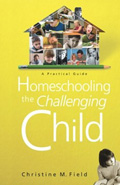
Homeschooling the Challenging Child by Christine Field
In Homeschooling the Challenging Child, Christine Field provides a useful guide for parents of children with learning or attention difficulties, strong wills, and other personality traits that make homeschooling harder.
Field, a trial lawyer turned homeschooling mom who homeschools her four very different children in Wheaton, Illinois, wrote a well-organized and clear book.
After beginning with a few examples of the varied needs of our challenging children, Field discusses the advantages of homeschooling: building the child’s confidence, and providing the opportunity to customize teaching style, learning environment, and content to suit the child’s needs and gifts.
She clearly explains terms, types of learning disabilities, the laws concerning learning disabilities, and kinds of attention deficit disorders.
Her chapter on attention disorders includes cultural factors, diagnosis, and “solutions:” treatments and adaptations.
In chapters five and six, she considers various ways of categorizing personalities and learning styles, because personality and learning style clashes can make homeschooling a challenge.
After some helpful thoughts and suggestions on discipline, comes chapter 8, Field’s look at caring for self, siblings, and marriage while homeschooling.
Chapter 9 is a good introduction to planning a homeschool program, while her last chapter addresses getting help from professionals.
She concludes with a lengthy and valuable discussion of resources.
Field’s tone is encouraging, practical, and down-to-earth. She admits struggles and failings.
Field surveyed many homeschooling families, whose stories and quotations enrich the book with a variety of challenges and solutions.
She also frequently quotes the Bible, which she finds a source of strength in this difficult task.
A regular theme of the book is that God enables parents who rely on him to cope and care, despite their frustrations.
Homeschooling the Challenging Child is a helpful and encouraging resource for those starting or continuing to homeschool a child with learning or attention difficulties.
The clarity and organization with which she defines terms, explains disabilities and disorders is her greatest strength.
Her practical suggestions and resources on working with public school personnel, caring for “Mom, Marriage, and Siblings,” planning a program, and getting professional help make this book one worth owning.
Christine M. Field, Homeschooling the Challenging Child. Broadman and Holman, 2005. ISBN 0805430784.
Buy this book from Amazon:
© 2009, 2010 Katherine Kuhl
 The Shallows: What the Internet is Doing to Our Brains by Nicholas Carr.
 The Ultimate Guide to Assistive Technology: Resources for Education, Intervention, and Rehabilitation by Joan L. Green
 Teaching How to Learn in a What-to-Learn Culture by Kathleen Ricards Hopkins.
 Lonely, Sad and Angry: How to Help Your Unhappy Child, by Barbara D. Ingersoll, Ph.D., and Sam Goldstein, Ph.D.
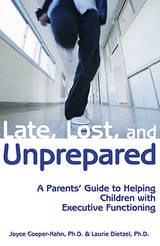 Late, Lost, and Unprepared: A Parents' Guide to Helping Children with Executive Functioning' by Joyce Cooper-Kahn, Ph.D. and Laurie Dietzel, Ph.D.
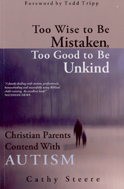 Too Wise to Be Mistaken, Too Good to Be Unkind: Christian Parents Contend with Autism by Cathy Steere.
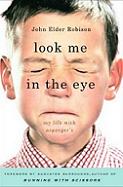 Look Me in the Eye: My Life with Asperger's by John Elder Robison.